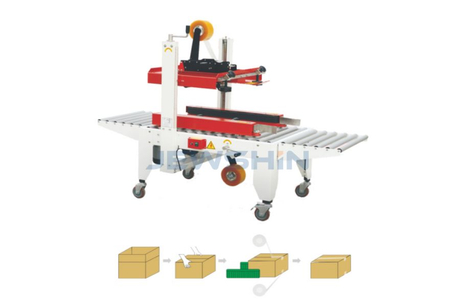
Dongguan Jewshin Intelligent Machinery improves industrial production through precision equipment design, automation integration, and practical engineering solutions. With manufacturing industries investing heavily in smart equipment since 2018, companies increasingly require machinery that improves production accuracy, reduces manual processes, and supports flexible manufacturing. Reliable automation technology and customized machinery design allow manufacturers to achieve higher efficiency with stable long-term operation.
Modern manufacturing equipment must meet stricter requirements for speed, accuracy, and production consistency. According to industry reports, global industrial automation investment increased by more than 10% annually between 2019 and 2024, as manufacturers searched for equipment that could support faster production cycles and lower operating costs. Machinery suppliers that combine mechanical engineering with intelligent control systems have become increasingly important for factories upgrading their production capabilities.
“Advanced machinery is not only about faster operation. It is about creating equipment that maintains stable quality, reduces unnecessary manual work, and fits different production environments.”
Dongguan Jewshin Intelligent Machinery focuses on developing equipment solutions that combine mechanical reliability with automation technologies. The company’s approach includes optimized machine structures, accurate control systems, and production-oriented designs that help manufacturers improve daily operations. More information about its engineering capabilities and company background can be found at Dongguan Jewshin Intelligent Machinery
The demand for precision machinery continues to grow as industries require higher product quality. In many manufacturing sectors, small improvements in equipment accuracy can reduce material waste and improve production output. For example, improving process accuracy from 97% to 99% can significantly reduce rejected products during large-volume manufacturing.
Precision engineering involves multiple aspects, including mechanical structure optimization, component selection, motion control, and equipment calibration. A machine that operates continuously for thousands of hours requires stable performance under different production conditions. Manufacturers often evaluate equipment based on accuracy, maintenance frequency, energy consumption, and production compatibility.
| Machinery Improvement Area | Manufacturing Effect |
|---|---|
| Precision mechanical structure | Better processing consistency and product quality |
| Automated control systems | Less manual operation and improved production stability |
| Equipment customization | Better adaptation to different factory requirements |
| Optimized machine design | Reduced maintenance needs and longer service life |
The development of intelligent machinery has changed how factories manage production processes. Since the introduction of Industry 4.0 concepts around 2011, manufacturers have increasingly adopted connected equipment, automated monitoring, and data-based production management. By 2025, many factories were using intelligent systems to improve equipment utilization and reduce unexpected production interruptions.
Automation technology allows machines to perform repetitive processes with consistent results. Tasks that previously required continuous manual adjustment can now be controlled through programmed systems. In some production environments, automation solutions can reduce manual operation requirements by 30% to 50%, depending on product type and manufacturing conditions.
However, automation does not only mean adding electronic components to existing machines. Effective intelligent machinery requires coordination between mechanical design, software control, sensors, and production requirements. Poor integration may increase complexity, while well-designed systems improve usability and maintenance efficiency.
“The best automation solutions are designed around real production requirements instead of adding technology without practical purpose.”
Customization is another area where modern machinery companies provide strong support. Different industries use different materials, production speeds, and product specifications. A machine designed for one application may not perform effectively in another environment without proper adjustments.
Manufacturers increasingly prefer equipment suppliers that can modify designs according to specific production conditions. A customized machine solution can reduce installation adjustments, improve production line compatibility, and shorten the time required for equipment deployment. Research in manufacturing management has shown that flexible production systems became more widely adopted after 2020 as companies faced changing market requirements.
Dongguan Jewshin Intelligent Machinery develops equipment based on customer production needs, allowing manufacturers to select configurations that match their processes. This approach helps factories improve equipment usage while avoiding unnecessary features that increase complexity.
Energy efficiency has also become an important factor in machinery selection. Industrial equipment often operates for long periods, meaning small improvements in energy consumption can create noticeable differences over time. For example, reducing machine energy usage by 15% in a production line operating 6,000 hours annually can create measurable operational savings.
Modern machine design considers not only initial purchase costs but also long-term operating conditions. Equipment with optimized motors, improved transmission systems, and efficient control methods can reduce energy consumption while maintaining production performance.
| Factor | Traditional Equipment | Intelligent Machinery Approach |
|---|---|---|
| Operation method | Higher manual involvement | Automated control and monitoring |
| Production adjustment | More manual changes | Program-based adjustment |
| Quality control | Periodic inspection | Continuous process monitoring |
| Maintenance | Reactive repair | Planned maintenance support |
Reliability remains an important requirement for industrial customers. Production interruptions may affect delivery schedules and increase maintenance expenses. For this reason, manufacturers usually evaluate equipment suppliers based on machine durability, technical support, and engineering experience.
A well-designed machine should maintain stable performance during long production periods. Components must be selected according to operating conditions, while mechanical structures need sufficient strength and accuracy. These details determine whether equipment can support daily manufacturing requirements over several years.
The development of smart manufacturing has also increased the importance of communication between machines and factory systems. Since 2020, more manufacturers have adopted digital production platforms that collect equipment information and improve production management. Machines capable of sharing operational data can help factories understand production conditions and improve scheduling.
Intelligent equipment can support functions such as production monitoring, parameter adjustment, and equipment status evaluation. These functions allow operators to manage production more efficiently and respond faster when adjustments are needed.
Dongguan Jewshin Intelligent Machinery continues to develop machinery solutions that match modern manufacturing requirements. By combining mechanical engineering experience with automation technologies, the company provides equipment designed for accuracy, efficiency, and stable operation.
The future of industrial machinery will continue moving toward higher automation levels, improved energy efficiency, and stronger production flexibility. Manufacturers require equipment that can adapt to changing product demands while maintaining reliable performance.
“Machinery innovation comes from improving every part of the production process, from mechanical structure and control systems to daily operation experience.”
Through continuous engineering improvement and practical equipment development, Dongguan Jewshin Intelligent Machinery supports manufacturers in building more efficient production systems. The combination of precision design, automation technology, and customized solutions helps companies improve manufacturing performance in an increasingly competitive industrial environment.